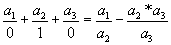
When (b1,b2,b3)=(1,0,0), it leads to
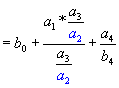
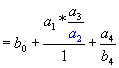
When (b1,b2,b3)=(0,0,1) instead, it leads to

The consecutive form for the former sequence(100)

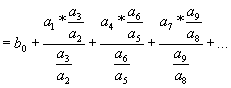
The consecutive form for the latter(001)

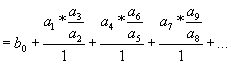
Mixed patterns with 1,0,1 and 0,1,0

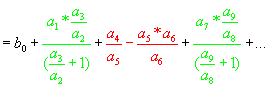
The former group comes from
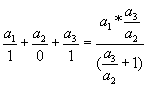
The latter group comes from